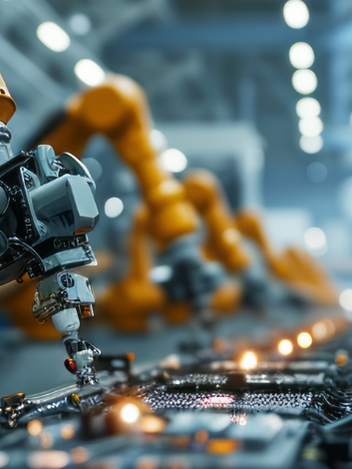
Manufacturing Analytics
Manufacturing Analytics brings together data from machinery, IoT sensors, plants, and enterprise systems to optimize production processes. It uses AI, data analytics, and predictive models to support predictive maintenance, quality control, and real-time monitoring to reduce downtime, scrap, and energy consumption.
What we do
Turn Industrial Data Into Operational Decisions
- Integrate IoT, operational, and business data into scalable data architectures
- Validate the quality and completeness of IoT and business data for analytics and AI initiatives
- Enable real-time analytics, alerts, and dashboards to monitor plants, equipment, and production lines
- Develop anomaly detection, predictive maintenance, and industrial forecasting models
- Embed insights and forecasts into operational and decision-making processes
Business outcomes
Reduce Downtime, Scrap, and Energy Consumption
- Help plant managers anticipate issues, equipment failures, and downtime
- Help operations and maintenance teams plan and optimize interventions
- Equip teams with data-driven tools to reduce scrap, defects, and production variability
- Give energy managers and production teams the information they need to optimize energy consumption and resources
- Give IT and data teams reliable foundations for scaling new AI use cases
How AI Can Improve Industrial Production Processes
Anticipate Failures and Reduce Downtime
Challenge: Anomalies often become apparent only when there is no longer enough time to prevent equipment failure.
Solution: Machine learning models analyze historical data and IoT signals, calculate anomaly scores, and detect anomalies before they become critical. This gives teams time to take preventive action and avoid or minimize operational disruption.
Predict Quality Issues to Reduce Scrap
Challenge: Production defects detected at the end of the process generate scrap, rework, and costs. The conditions that caused a defect may be recorded, but turning this information into actionable insights is difficult.
Solution: AI connects process data, real-time monitoring, and historical information to power predictive models that can identify when production is likely to generate defects and intervene before they occur.
Optimize Energy Consumption
Challenge: Variable production requirements make it difficult to choose the plant's most efficient energy configuration.
Solution: Forecasting, data pipelines, and dashboards process current data and recommend the optimal configuration each day. AI agents evaluate complex future scenarios and identify the most effective decision path.